What Is Brand Voice and Why It Matters for Social Media
Your brand voice is how your business talks. It's the consistent personality, tone, and values that come through in every social media post, caption, and comment. Think of it as the written equivalent of how your business would sound if it could speak in person.
For small business owners juggling everything from inventory to customer service, brand voice might feel like a luxury. But here's the truth: a consistent brand voice is one of the most powerful tools you have to build trust, stand out in a crowded feed, and turn casual followers into loyal customers.
According to Sprout Social's 2024 research, 72% of consumers expect brands to understand their individual needs, and a huge part of that understanding comes through how you communicate. When your brand voice is clear and consistent, people don't just follow you. They recognise you instantly and feel connected to what you're saying.
Why Brand Voice Matters More Than Ever on Social Media
Social media is noisy. On any given day, your audience sees hundreds of posts from businesses like yours. Without a distinct brand voice, your content blends in.
When you have a recognisable voice, several things happen:
- Recognition: Followers learn to identify your posts in their feed before they even see your logo. A consistent tone becomes a signature.
- Trust: People do business with people (and brands) they trust. A consistent, authentic voice proves you're not all over the place.
- Loyalty: When your voice aligns with your audience's values and personality, they feel understood. That emotional connection drives repeat business.
- Differentiation: Two fitness coaches posting about the same workout will get very different engagement if one sounds like a drill sergeant and the other like a supportive friend. Voice is what sets you apart.
Additionally, a clear brand voice makes content creation faster and easier. Your team (or you, if you're flying solo) will spend less time debating how something should sound and more time creating posts that actually resonate.
The Core Elements of Brand Voice
Brand voice typically consists of four interconnected elements:
Tone
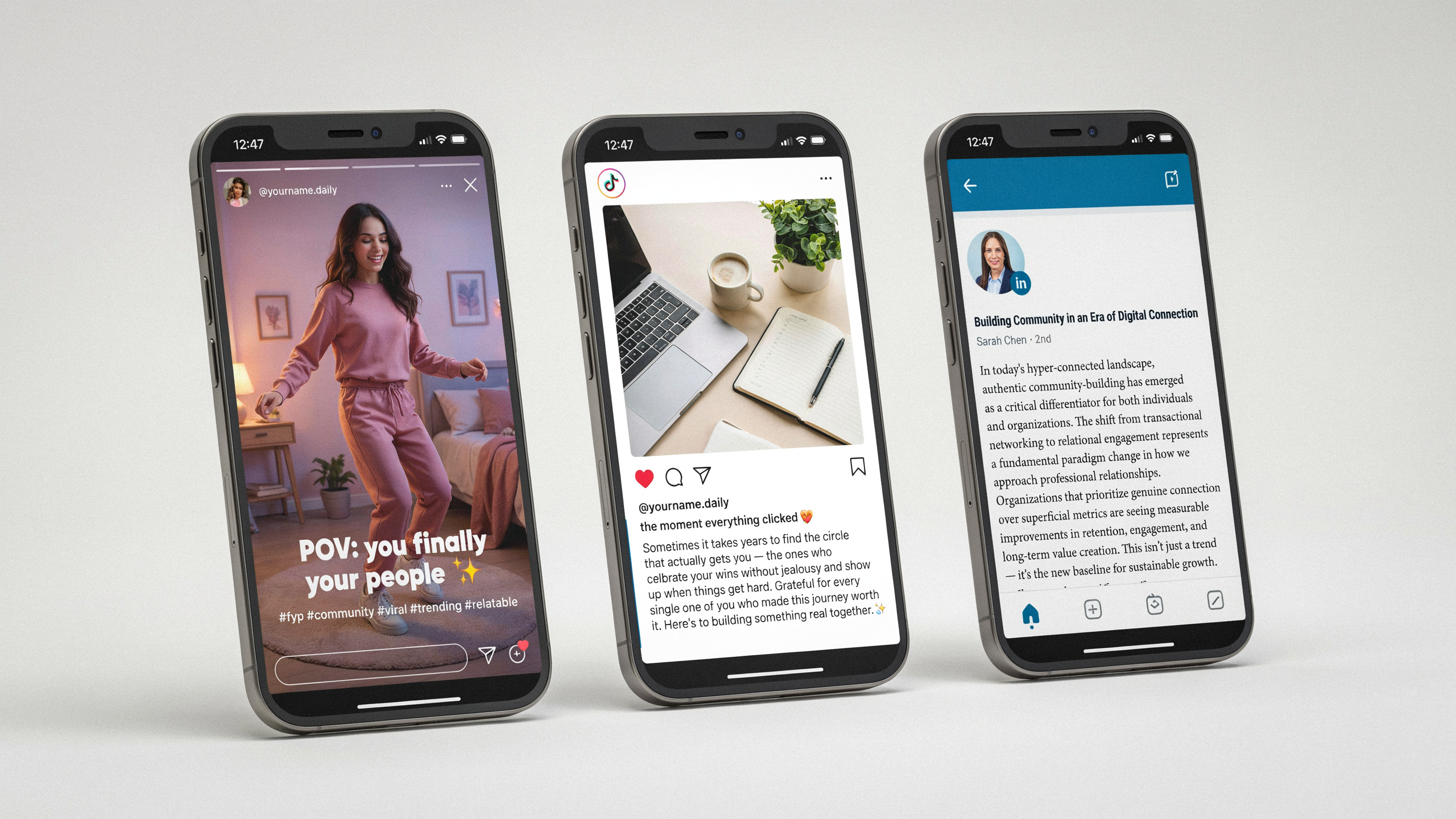
Tone is the emotional quality of your writing. Are you professional and formal, casual and friendly, playful and irreverent, or inspirational and motivational? Your tone might shift slightly between platforms (a LinkedIn post might be more professional than a TikTok caption), but the underlying voice stays the same.
Personality
What personality traits does your brand embody? Is your business adventurous, trustworthy, innovative, down-to-earth, or premium and exclusive? Think about the adjectives that genuinely describe how you want customers to perceive you.
Values
What does your business stand for? Do you prioritise sustainability, community, transparency, excellence, or inclusivity? Your voice should reflect these values in how you talk about your products, respond to comments, and engage with your community.
Language and Style
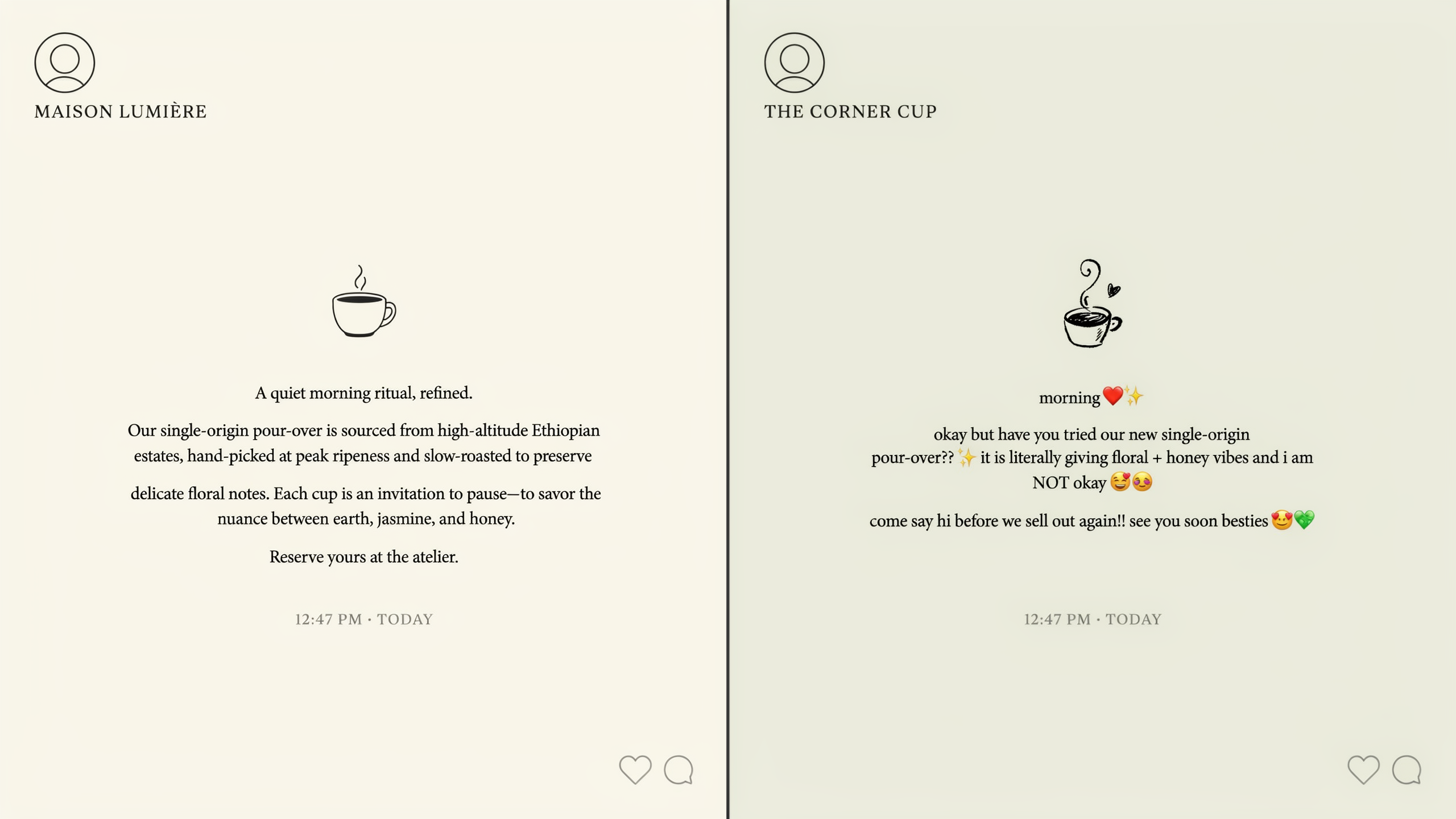
This includes your vocabulary, sentence structure, use of humour, metaphors, and even technical language. Do you use industry jargon or explain things in plain English? Do you write short, snappy sentences or longer, flowing ones? Do you use emojis, exclamation points, or slang?
How to Define Your Brand Voice
If you haven't formally defined your brand voice yet, start here. This doesn't need to be complicated or time-consuming.
1. Start with your audience. Who are they? What do they value? What problems do they have? What tone makes them feel heard? A brand voice that works for Gen Z creators won't work for a B2B accounting firm, and that's okay.
2. Look at your competition. How do similar businesses talk on social media? Where are they being boring or missing the mark? Find the gap where your authentic voice can stand out.
3. Write down 3-5 words that describe your brand personality. Examples: friendly, bold, trustworthy, innovative, no-nonsense, warm, professional, playful. These become your north star.
4. Create example sentences or captions. Write how you would describe your product, respond to a customer question, or celebrate a win. This gets the actual voice on paper instead of just abstract descriptions.
5. Document it and share it. Whether you're working solo or with a team, write down your brand voice guidelines. If you have multiple people creating content for your business, they need to know how you sound. This is also where brand guidelines like your tone, language preferences, and visual style come together.
Brand Voice in Practice: Real Examples
Let's look at how brand voice plays out in real scenarios:
A fitness coach with an encouraging voice might post: "Got only 15 minutes today? That counts. Show up for yourself, even when life's busy. Progress isn't always about perfect workouts, it's about consistent effort." This voice builds community and makes fitness feel accessible.
The same information from a luxury fitness brand might read: "Elevate your performance. Our signature 15-minute protocols are designed for results, not excuses. Excellence demands consistency." This voice positions the brand as premium and professional.
A sustainable fashion brand with values-driven voice might write: "We just hit 500 customers! Thank you for choosing clothes that don't compromise the planet. Every purchase funds ocean cleanup projects. You're making a difference." This voice emphasises shared values and impact.
All three are talking about their services, but the voice is completely different because it reflects different audiences, values, and brand personalities. Your voice doesn't need to be the loudest or the fanciest. It just needs to be authentically you.
Common Brand Voice Mistakes to Avoid
Being inconsistent is the biggest mistake. If your Wednesday caption sounds nothing like your Monday post, followers get confused about what your brand actually is.
Another common pitfall is trying to sound like someone else. You might think a certain tone will appeal to more people, but inauthenticity shows. Your audience came to you because of who you are, not who you're trying to be.
Don't confuse brand voice with fake personality either. Brand voice is authentic, but it's also intentional. It's not about being "real" in a raw, unfiltered way. It's about being genuinely you in a way that serves your business and resonates with your audience.
Finally, avoid changing your voice every quarter based on trends. Trends come and go, but consistency builds recognition over months and years. You can evolve your voice as your business grows, but sudden shifts will confuse your followers.
How Brand Voice Improves Content Creation
A clear brand voice doesn't just help your followers understand you. It dramatically speeds up content creation. When you know how you sound, you don't spend hours debating whether a caption is right. You know instantly if it matches your voice.
This is especially valuable if you're delegating content creation to a team member or using AI tools. The clearer your voice guidelines, the easier it is for anyone helping with your content to stay on brand. When you use AI to generate content, feeding it details about your voice and tone helps it create captions that actually sound like you.
Additionally, consistency in voice makes your content calendar more efficient. You're not reinventing the wheel for every post. You have a framework. You know your tone, your values, and your style. You fill in the details based on what you're posting about that day.
Brand Voice Across Different Platforms
Your core brand voice stays the same across TikTok, Instagram, Facebook, and LinkedIn, but the expression of it shifts slightly. LinkedIn skews more professional, while TikTok invites more playfulness. Facebook reaches an older demographic that might appreciate slightly longer captions. Instagram thrives on visual storytelling with concise, engaging text.
Think of it like accent and dialect. Your core voice is your accent, which never changes. Your platform-specific style is your dialect. The underlying person is the same, but you adapt your expression slightly to the room you're in.
For example, a software company's voice might be helpful and clear across all platforms. But on LinkedIn, they might write a detailed, professional explanation of a feature. On TikTok, they might explain the exact same feature in a quick, fun video with captions and trending audio. Same voice, different expression.
Maintaining Consistency as You Scale
As your business grows and you bring on team members or use automation tools, maintaining your voice becomes both more important and more challenging.
Document everything. Write a one-page brand voice guide that includes your personality descriptors, tone examples, language do's and don'ts, and sample captions. Share this with anyone who creates content for you. Update it as your brand evolves, but keep it stable enough that followers always know who you are.
If you're using multiple team members to manage social media, regular check-ins help catch voice drift early. When one person posts on Monday and another on Wednesday, it's easy to accidentally shift tone. Quick reviews keep everyone aligned.
Tools can also help. When you review and approve posts before they go live, you catch anything that doesn't sound like your brand. This quality gate keeps your voice consistent even as your content volume grows.
The Long-Term Impact of a Strong Brand Voice
Six months from now, if you commit to a consistent brand voice, your followers will start finishing your sentences. They'll predict your captions before they read them. They'll recommend you to friends because they feel they know you.
This recognition and trust translate directly into sales. People don't buy from random brands that pop up in their feed. They buy from brands they recognise, trust, and feel connected to. A strong brand voice builds all three.